

The broad spectrum caspase inhibitor, QVD-OPh, provides a cost effective, non toxic, and highly specific means of apoptotic inhibition and provides new insight into the design of new inhibitors1.
Actinomycin D rapidly induced apoptosis and this was dramatically inhibited by the caspase inhibitor, Q-VD-OPh (quinolyl-valyl-O-methylaspartyl-[-2, 6-difluorophenoxy]-methyl ketone). Q-VD-OPh was significantly more effective in preventing apoptosis than the widely used inhibitors, ZVAD-fmk and Boc-D-fmk. Q-VD-OPh was also equally effective in preventing apoptosis mediated by the three major apoptotic pathways, caspase 9/3, caspase 8/10, and caspase 12. In addition to the increased effectiveness, Q-VD-OPh was not toxic to cells, even at high concentrations.
Q-VD-OPh was equally effective at inhibiting the three major apoptotic pathways, was functional in different cell types and species (human, mouse, and rat) and prevented terminal caspase activation, substrate cleavage, and DNA ladder formation associated with apoptosis. Q-VD-OPh can inhibit recombinant caspases 1, 3, 8, and 9 with IC50 values ranging from 25 to 400 nM2. The effectiveness of Q-VD-OPh as an apoptotic inhibitor is evidenced by the complete suppression of an apoptotic inducer capable of inducing substantial cell death in less than 4 hours.
Q-VD-OPh protected against the substantial apoptosis induced by actinomycin D. In addition, Q-VD-OPh alone exhibited little or no toxicity, even at extremely high concentrations.
The effective concentration of Q-VD-OPh may provide a unique reagent when trying to revive hard to propagate cell lines from liquid nitrogen. The addition of this inhibitor to thawed cells would give the cells adequate time to recover, even in the presence of standard DMSO concentrations (10%), from the stress of thawing and begin to proliferate in the absence of toxicity. Q-VD-OPh is stable in solution for several months and is effective in culture for at least 2.5 days. This would provide an ideal time frame for cell recovery; whereas, the subsequent decrease in effectiveness over time would be fortuitous in that the cells would return to standard culture conditions with minimal manipulation1.
References:
1. T. M. Caserta, A. N. Smith, A. D. Gultice, M. A. Reedy and T. L. Brown, Q-VD-OPh, a broad spectrum caspase inhibitor with potent antiapoptotic properties, Apoptosis 2003; 8: 345–352
2. Yin XM. Signal transduction mediated by Bid, a pro-death Bcl-2 family proteins, connects the death receptor and mitochondria apoptosis pathways. Cell Res 2000; 10: 161–167
- 1. Sullivan GP, O'Connor H, et al. "TRAIL Receptors Serve as Stress-Associated Molecular Patterns to Promote ER-Stress-Induced Inflammation.". Dev Cell. 2020;S1534-5807(20)30063-0. PMID:32109381
- 2. Wang C. "A Sensitive and Quantitative mKeima Assay for Mitophagy via FACS." Curr Protoc Cell Biol. 2020;86(1):e99. PMID:31876372
- 3. Shunfei Yan, Piyush B. Madhamshettiwar, et al. "Targeting RNA Polymerase I transcription synergises with TOP1 inhibition in potentiating the DNA damage response in high-grade serous ovarian cancer." bioRxiv. 2019 November 20.
- 4. Xiaoshan Shi, Adam L. Yokom, et al. "ULK complex organizationin autophagy by a C-shaped FIP200 N-terminal domain dimer." BioRxiv. 2019 Nov. 12.
- 5. Bahjat M, de Wilde G, et al. "The NEDD8-activating enzyme inhibitor MLN4924 induces DNA damage in Ph+ leukemia and sensitizes for ABL kinase inhibitors." Cell Cycle. 2019 Jul 26:1-16. PMID:31349760
- 6. Britt EL, Raman S, et al. "Combination of fenretinide and ABT-263 induces apoptosis through NOXA for head and neck squamous cell carcinoma treatment." PLoS One. 2019 Jul 5;14(7):e0219398. PMID:31276572
| Storage | Store at -20°C |
| M.Wt | 513.49 |
| Cas No. | 1135695-98-5 |
| Formula | C26H25F2N3O6·xH2O |
| Solubility | ≥25.6745mg/mL in DMSO |
| Chemical Name | (3S)-5-(2,6-difluorophenoxy)-3-[[(2S)-3-methyl-2-(quinoline-2-carbonylamino)butanoyl]amino]-4-oxopentanoic acid |
| SDF | Download SDF |
| Canonical SMILES | CC(C)C(C(=O)NC(CC(=O)O)C(=O)COC1=C(C=CC=C1F)F)NC(=O)C2=NC3=CC=CC=C3C=C2 |
| Shipping Condition | Evaluation sample solution: ship with blue ice. All other available sizes: ship with RT, or blue ice upon request. |
| General tips | For obtaining a higher solubility, please warm the tube at 37°C and shake it in the ultrasonic bath for a while. Stock solution can be stored below -20°C for several months. |
| Cell experiment[1]: | |
Cell lines | JURL-MK1 and HL60 cell |
Preparation method | The solubility of this compound in DMSO is >10 mM. General tips for obtaining a higher concentration: Please warm the tube at 37 °C for 10 minutes and/or shake it in the ultrasonic bath for a while.Stock solution can be stored below -20°C for several months. |
Reaction Conditions | No specific suggestion |
Applications | Q-VD-OPh largely inhibited caspase-3 and 7 activity at 0.05 mM. Caspase-8 was also inhibited by Q-VD-OPh at very low concentration. Q-VD-OPh prevented the cleavage of PARP-1 at 10 mM . Q-VD-OPh inhibited DNA fragmentation and disruption of the cell membrane functionality at 2 mM, and the drug-induced loss of cellular adhesivity to fibronectin need 10 mM Q-VD-OPh. |
| Animal experiment [2]: | |
Animal models | TgCRND8 mice in 3 months-old |
Dosage form | Intraperitoneally Injected with 10 mg/kg QVD-OPh at 3 times a week for 3 months |
Applications | Q-VD-OPh inhibited caspase-7 activation and limited the pathological changes of tau and caspase cleavage in chronic treatment of Alzheimer disease. |
Other notes | Please test the solubility of all compounds indoor, and the actual solubility may slightly differ with the theoretical value. This is caused by an experimental system error and it is normal. |
References: 1. Kuželová K1, Grebeňová D, Brodská B.Dose-dependent effects of the caspase inhibitor Q-VD-OPh on different apoptosis-related processes. J Cell Biochem. 2011 Nov;112(11):3334-42. 2. Rohn TT, Kokoulina P, Eaton CR et al. Caspase activation in transgenic mice with Alzheimer-like pathology: results from a pilot study utilizing the caspase inhibitor, Q-VD-OPh. Int J Clin Exp Med. 2009 Nov 5;2(4):300-8. | |
| Q-VD-OPH is a selective, brain and cell permeable, highly potent and irreversible inhibitor of caspase-3 ( IC50=25nm), caspase-1 (IC50=50nM), caspase-8 (IC50=100nM) and caspase-9 (IC50=430nM). | ||||||
| Targets | caspase-1 | caspase-3 | caspase-8 | caspase-9 | ||
| IC50 | 50nM | 25nm | 100nM | 430nM | ||
Featured
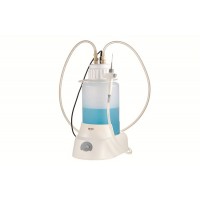
SAFEVAC
DLAB SAFEVAC - Vacuum Aspiration SystemsSafeVac is designed for laboratory waste recovery ..
$0.00 Ex Tax: $0.00
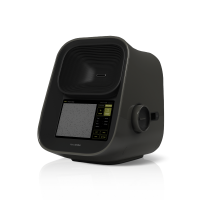
EVE™ Plus |The World's Fastest Cell Counter
The World's Fastest Automated Cell CounterAuto focus & Manual focusAuto focus total cell, l..
$0.00 Ex Tax: $0.00

JUPITER | Single & parallel autoclavable stirred mini-fermenter/bioreactor
JUPITER™ Autoclavable Benchtop Bioreactor & FermenterThe JUPITER™ series from Solaris Biotech is..
$0.00 Ex Tax: $0.00